

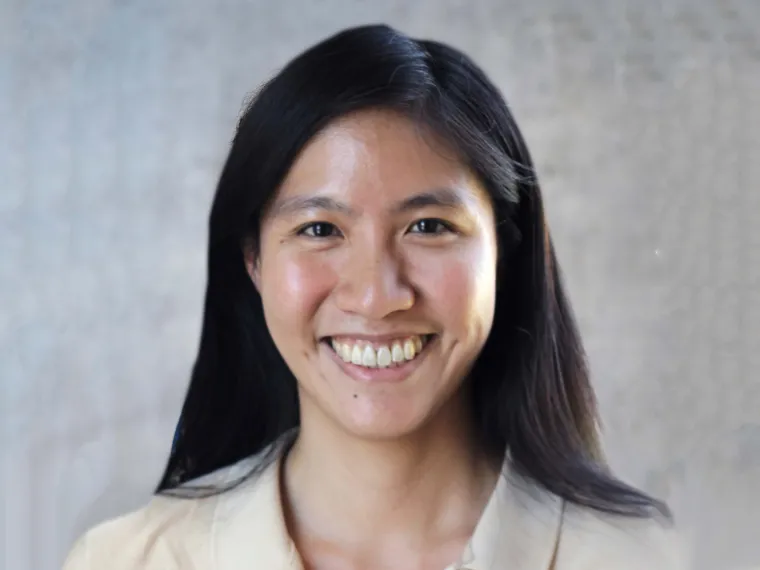
Tsu-Te Judith Su
Associate Professor of Optical Sciences
BSRL 178
Wyant College of Optical Sciences
University of Arizona
1630 E. University Blvd.
P.O. Box 210094
Tucson, AZ 85721-0041
Links
Additional Affiliations
- Associate Professor of Biomedical Engineering
Professional Affiliations and Activities
- Board of Scientific Counselors, National Institute for Occupational Safety and Health (NIOSH)
- Scientific Advisory Board, Femtoray Technologies
- International Society for Extracellular Vesicles (ISEV): Member
- Materials Research Society (MRS): Member
- OSA: Life Member
- SPIE: Life Member
- University of Arizona Cancer Center: Associate Member
- Editorial Board, Translational Biophotonics (Wiley-VCH publishing)
Awards and Honors
- Optica Fellow, 2026
- University of Arizona Convergence Award for Excellence in Research and Creative Activity (Applied Research and Engineering), 2026
- NIH Quantum Sensing Challenge Prize, Stage 1 Team Winner, 2025
- SPIE Fellow, 2025
- Selected Feature, *Optics & Photonics News* “Year in Optics,” 2025 — recognized for label-free optical mapping of single 5-nm quantum dots; featured on the cover
- Participant, 2nd U.S.-Africa Frontiers of Science, Engineering, and Medicine Symposium, U.S. National Academy of Sciences, 2024
- Photonics 100, *Electro Optics*, 2024 — recognizing the industry’s most innovative people
- ASME Rising Star, 2024
- Journal of Physics: Photonics* Emerging Leaders Award, 2023
- NSF CAREER Award, 2023
- University of Arizona Arizona Champion, Office of the Provost and Faculty Affairs, 2023
- University of Arizona Early Career Innovation & Entrepreneurship Award, 2023
- University of Arizona Women of Impact, Inaugural Class, 2022
- University of Arizona Research Leadership Institute, Inaugural Class, 2022
- University of Arizona College of Engineering Dean’s Award for Outstanding Early Career Faculty, 2022
- National Academy of Inventors Senior Member, 2022
- Keynote Speaker, SPIE Photonics West, 2022
- SPIE Senior Member, 2022
- Optica Senior Member, 2021
- NIH R35 Outstanding Investigator Award, 2020
- Sigma Xi Member, 2020
- Featured in the SPIE Women in Optics Planner, 2020
- George H. Davis Travel Fellowship, University of Arizona, 2019
- American Society for Laser Medicine and Surgery Dr. Horace Furumoto Innovations Professional Young Investigator Award, 2019
- Scialog Fellow, Research Corporation & Gordon and Betty Moore Foundation, 2018
- Outstanding Paper Award, *Light: Science & Applications*, 2018
- Optical Society of America Siegman International School Lecturer, 2017
- Selected Feature, *Optics & Photonics News* “Year in Optics,” 2016 — recognized for FLOWER single-molecule detection
- Short Oral Presentation Winner, GTCbio Cancer Markers & Liquid Biopsies Conference, 2015
- NIH Training Grant in Cellular and Molecular Biology, Caltech, 2006–2009
- National Science Foundation Graduate Research Fellowship, 2002–2005
- Pademakar P. Lele Best Undergraduate Thesis Proposal Award, MIT Department of Mechanical Engineering, 2001
Specific Research Interests
- Biosensing and imaging
- Label-free single molecule detection
- Medical diagnostics
- Microfluidics
- Micropatterning of extracellular matrix molecules for cellular control
- Optical resonators
- Using magnetic and optical tweezers to study cellular dynamics
Research Summary
Judith Su's background is in imaging, microfabrication and optical instrument building for biological and medical applications. In general, her research interests are to use imaging, sensing and rheological techniques to reveal basic biological functions at the molecular, cellular and tissue levels. Recently her work has centered on label‐free single molecule detection using microtoroid optical resonators with an eye on basic research, and translational medicine through the development of miniature field portable devices.
FLOWER is After Ovarian Cancer Detection: A Five Minute Review with Prof. Judy Su
Degrees
- Ph.D. Biochemistry and Molecular Biophysics, Caltech, 2014
- M.S., Mechanical Engineering, MIT, 2004
- B.S., Mechanical Engineering, MIT, 2002